

Best way to understand AWS Well Archietected Framework
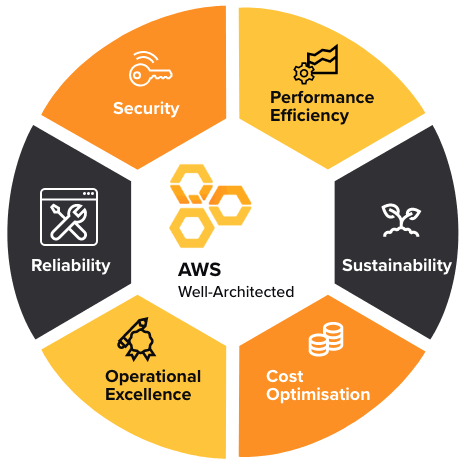
Imagine you're running a school where you serve as the principal. As the principal, you are the main operator of the school. However, you can't handle everything alone—so you hire teachers and staff to manage various tasks. Each of them has their own set of responsibilities to follow, and there are rules and laws in place to maintain the decorum of the school.
While you're in charge of the school's overall operations, it's not realistic to place all the responsibility for growth and management solely on yourself or the staff. Instead, responsibilities are shared. As a principal, you delegate certain duties to both staff and students, ensuring that each group does its part. This distribution of responsibilities is key to the smooth functioning and success of the school.
Similarly, in the AWS Shared Responsibility Model, both AWS and the customer have their own roles. AWS takes care of the security of the cloud (like infrastructure, networking, and hardware), while the customer is responsible for security in the cloud (like data, access management, and configurations).
Just like a school cannot function properly without shared responsibility, cloud environments remain secure and efficient only when both AWS and the customer understand and fulfill their respective roles.
This analogy helps us clearly understand how the AWS Shared Responsibility Model works.
Some important principle of AWS customer responsibility model :
List of important principles of the AWS Customer Responsibility Model explained in simple English with a slight sarcastic touch, while still sounding like you know your stuff and respect AWS:
AWS Customer Responsibility Model – The "You Handle This" Edition
1. Your Data, Your Drama
AWS isn’t your babysitter. You put your data on the cloud? You better make sure it’s encrypted, backed up, and not publicly exposed unless you want a front-row seat to a data leak scandal.
2. You Control Access, So Don’t Give the Keys to Everyone
IAM (Identity and Access Management) is your responsibility. If your intern has admin access to your production server—congrats, you played yourself.
3. Patching Your OS Isn’t AWS’s Job
If you’re using EC2 or managing your own environment, patch it regularly. AWS won’t come knocking on your door with a “Hey, update available!” reminder.
4. Security Groups Are Not Suggestions
Leaving all ports open "just to test something" is like leaving your house unlocked because you’re “only going out for five minutes.” Guess what? Hackers don’t need five minutes.
5. You Pick the Services, So Don’t Blame AWS When You Mess Up
Chose the wrong storage class or made an S3 bucket public by accident? That’s on you. AWS gives you powerful tools, but with great power comes great... yeah, you know the drill.
6. Logs Exist for a Reason – Read Them Before the Fire Starts
Cloud trail , CloudWatch, and other logs are your eyes in the cloud. Ignoring them is like driving blindfolded and acting shocked when you crash.
7. Shared Responsibility Doesn’t Mean Shared Blame
Just because AWS handles the infrastructure doesn’t mean you get a free pass. If you mis configure something, it’s your circus, your monkeys.